
My First Trip Abroad, Sarajevo: Ćevapi, a Mostar Tour, a Stolen Wallet and a Chicken Sandwich
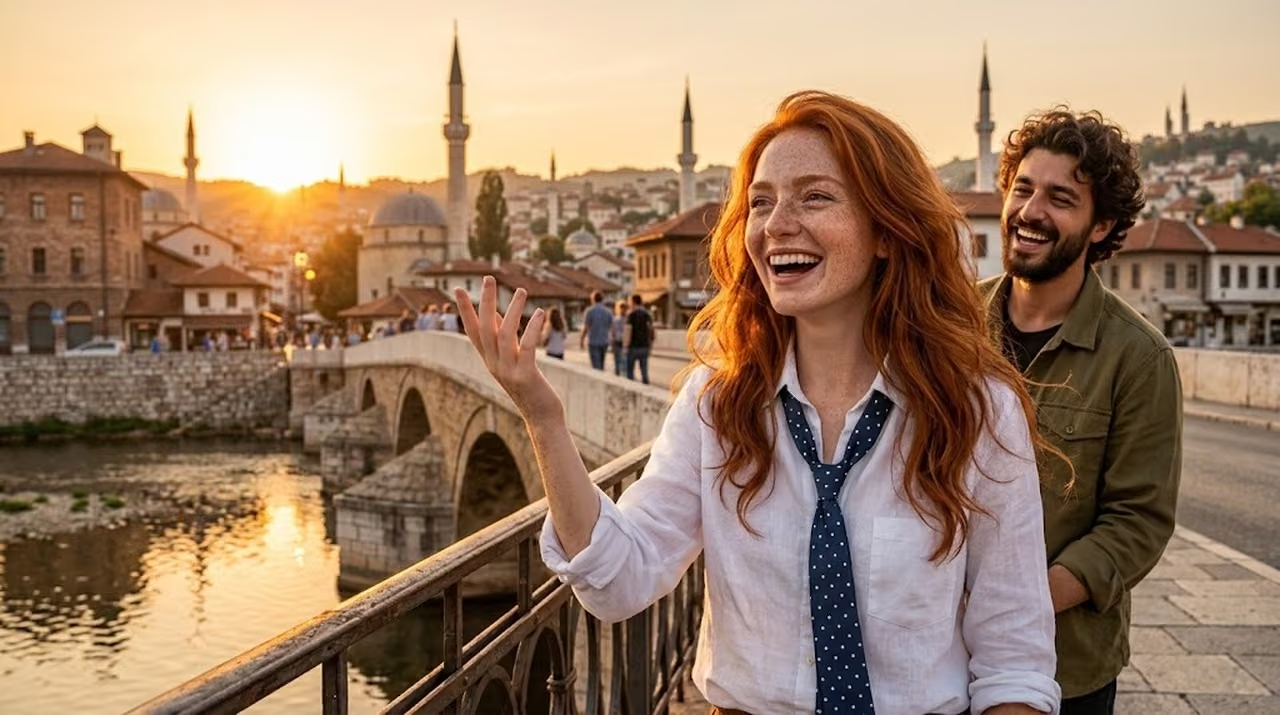
Six people, three days, one city. Ćevapi in Baščaršija, coffee on Hecco's terrace, all of Herzegovina from Mostar to Kravice... and a pile of mishaps on the way home. Frezya tells the story of her first trip abroad, including the Latin Bridge where she couldn't fasten her lock.
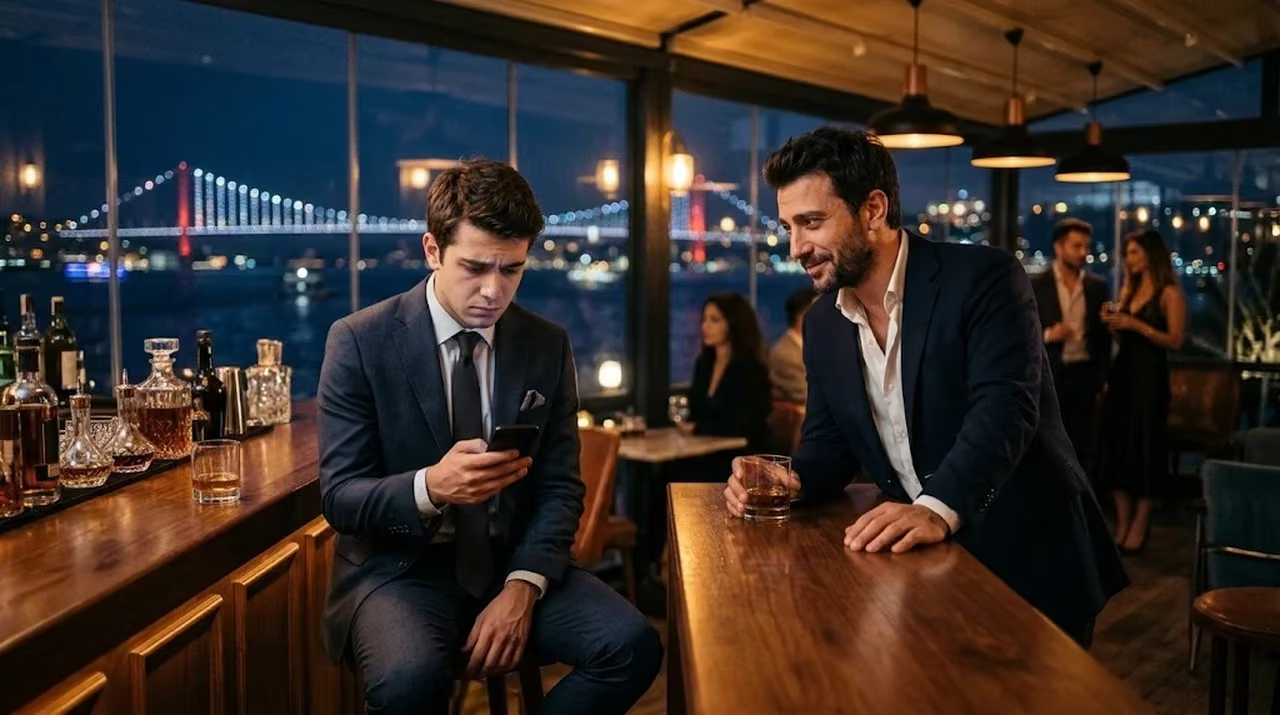
Photo: Yapay zekâ ile üretilmiştir
Darlings, let me start with a confession: I had never been abroad before this. The day I got my passport, I felt no sorrow like the heroes in Yeşilçam films who leave for faraway lands, just the pure joy of a little kid. I put the passport in my bag, took it out, put it back in. My first foreign destination was set: Sarajevo.
Our group was big. Enes, his sister Esma, Necdet, Enes's older brother by a year, Enes's friend Yunus, and my dear friend Perin. Six people, three days, one city: January 5-7, the first week of the new year. What could possibly happen? Just wait.
A house right next to Baščaršija
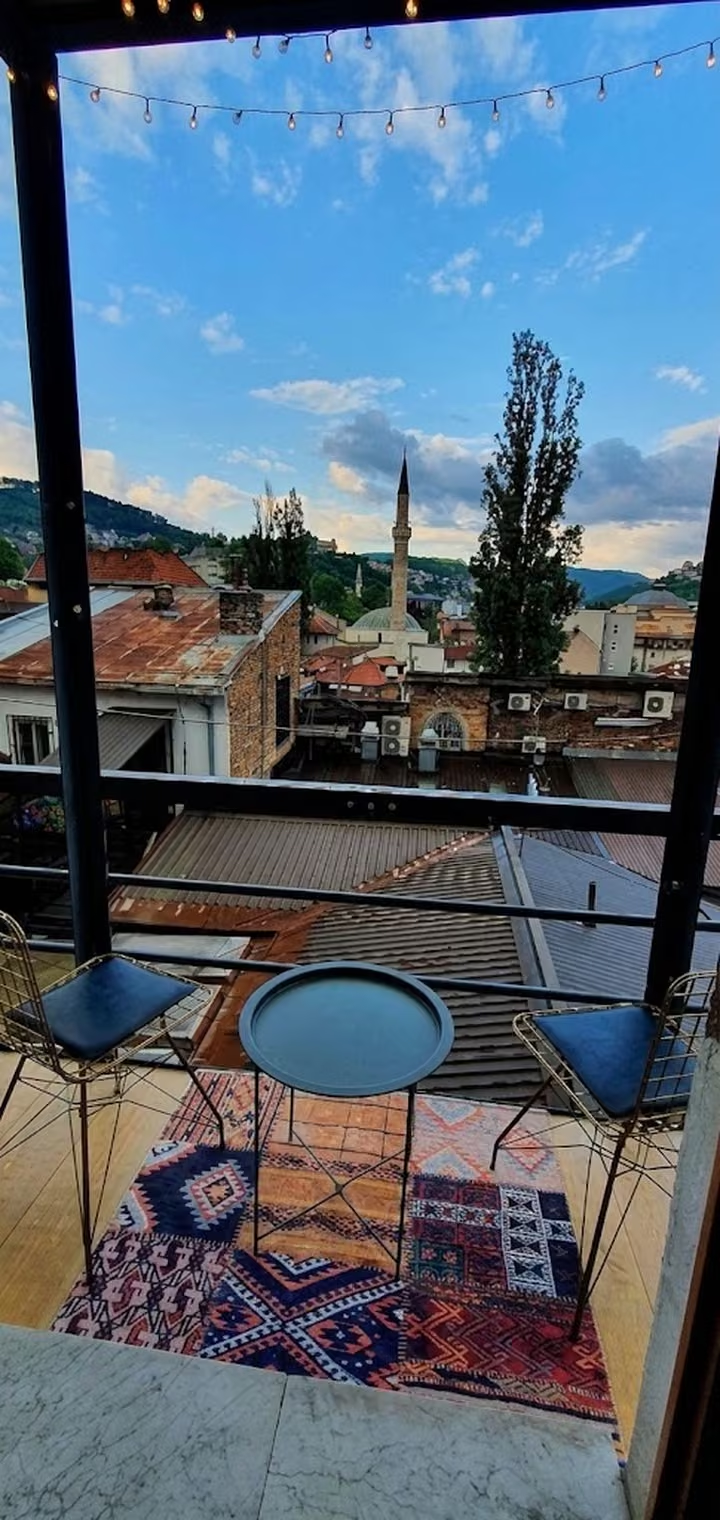
With six of us, we decided to rent a house instead of scattering across hotel rooms. We found Apartment Noah on Booking and made the reservation through Booking. Lucky us. It was a 4+1 apartment, so all six of us fit comfortably. The atmosphere was cozy, and the view was so beautiful that we lined up to drink our morning coffee in front of the window.
The best part was its location: the house was right next to Baščaršija. You step out the door, and a few steps later you find yourself among stone streets. If you're traveling with a big group, a place like this is both nicer and more practical than a hotel.
First evening: Ćevapi and a cash surprise
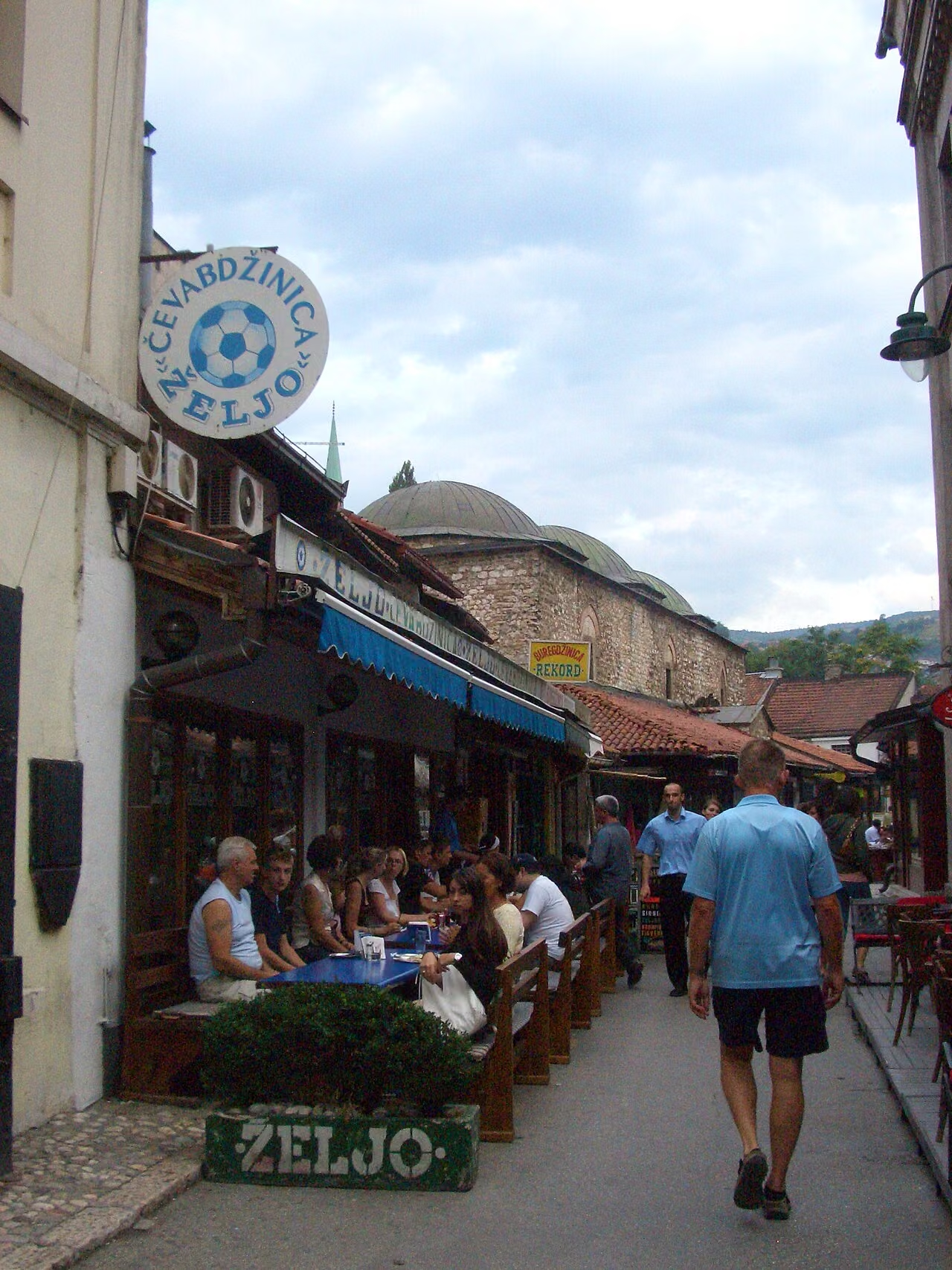
We arrived in Sarajevo toward the evening. As soon as we dropped off the suitcases, we ran to eat, because everyone says, "You can't leave Sarajevo without eating ćevapi." Our address was Ćevabdžinica Željo in Baščaršija.
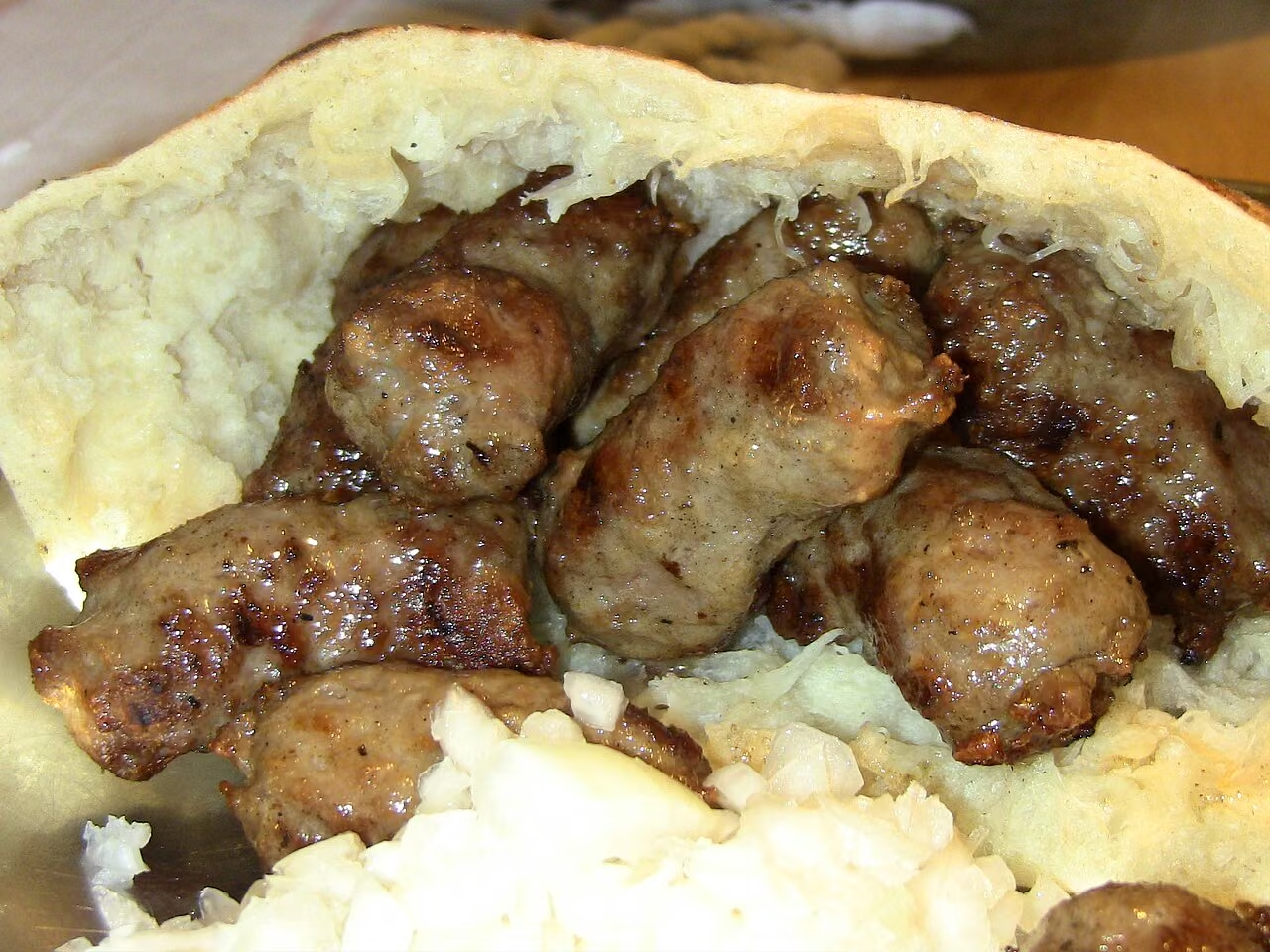
Ćevapi are small kebabs served inside warm flatbread, with a cold sauce that resembles clotted cream on the side. At the first bite, I looked at Enes and he looked at me. Neither of us said a word. Some flavors are like those long glances in Aşk-ı Memnu; no words needed.
But let me give you my first tip right away: carry cash in Sarajevo. Credit cards aren't accepted in most places. We learned it on the first evening; you can learn it from us.
An evening stroll in Baščaršija
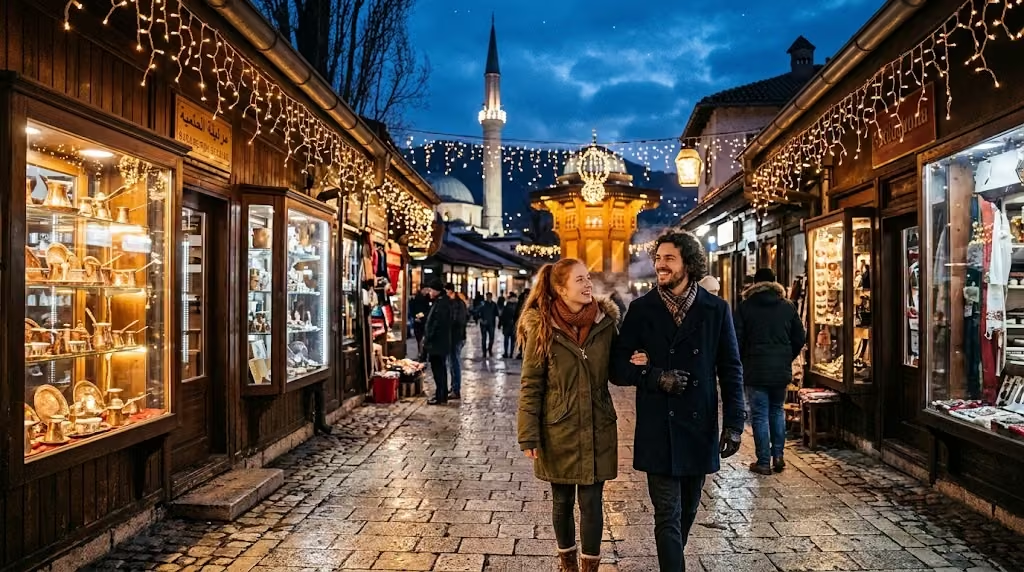
Once we were full, we went out to tour Baščaršija. Stone streets, coppersmiths, domes glowing in the evening light... For a moment you think you're in an old street in Istanbul, then the signs say, "No, this is somewhere else."
Since we went in early January, the city was still in New Year mode. Baščaršija's streets were decorated with lights, and the shop windows and trees sparkled with colorful bulbs. Walking on a cold winter evening under those lights, looking at Ottoman domes, was a real movie scene. You know those cozy towns in Christmas movies? This was that, with minarets.
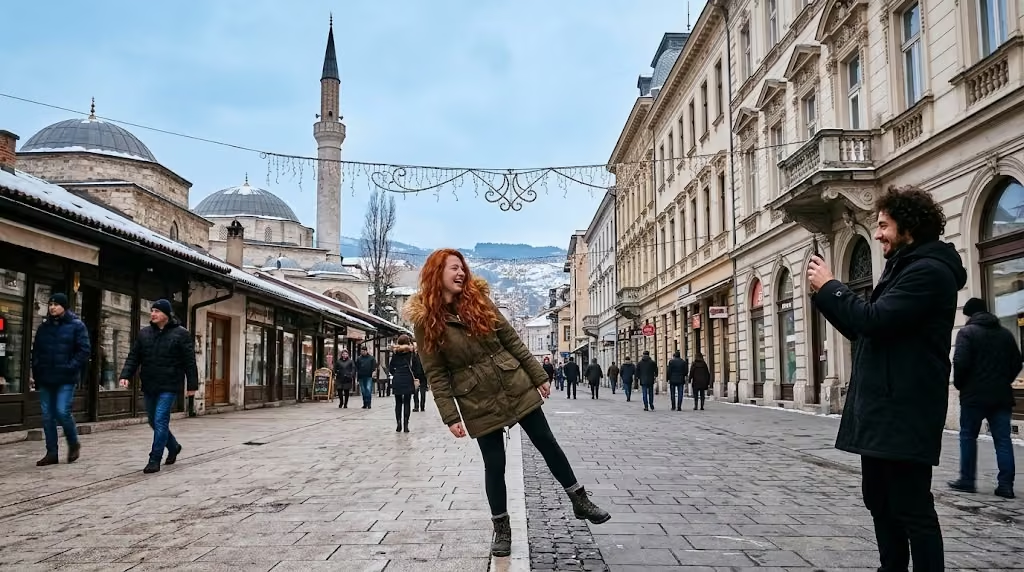
But what surprised me most was this: standing in the middle of a street in Baščaršija, look one way and you see the Ottomans, look the other and you see Europe. On one side, low-roofed shops, copper coffee pots, domes and minarets; on the other, tall, ornate-fronted buildings from the Austro-Hungarian era. On Ferhadija Street, at the exact point where these two worlds meet, the ground reads "Sarajevo Meeting of Cultures." Of course I put one foot on one side and the other foot on the other and had my photo taken. Standing between two worlds felt like touring not one city but two at once.
We couldn't have passed Sebilj without taking photos. We lined up all six in front of the wooden fountain that symbolizes the city and posed. Then we went to the Eternal Flame. Standing before that little fire that has burned without going out for years in the middle of the city, everyone fell silent for a moment.
A mournful city: the Sarajevo Roses
It's impossible to walk around Sarajevo without noticing one thing: this city is very beautiful, but just as mournful. Beneath its beauty lies a fresh wound.
Between 1992 and 1996, Sarajevo was under siege for about four years. The city was shelled from the hills and hit by sniper fire, and thousands of people lost their lives. Even today you can still see bullet and shrapnel marks on the walls of some buildings.
But what affected me most were the red marks on the ground. Walking on sidewalks and in squares, you come across flower-like shapes painted red on the ground. They are called "Sarajevo Roses." Each one marks a spot where a shell landed and people lost their lives. The craters the shells made in the concrete have been filled with red resin; it's as if the city, instead of hiding its wounds, left a red rose over them so they won't be forgotten.
The first time I saw one, I was about to walk over it without knowing what it was. When I learned, I stopped and looked for a while. After that moment, my steps slowed a little every time I passed a red mark in the city.
I later learned that the Eternal Flame is also part of this memory: it was lit in memory of those who lost their lives in World War II and has burned since that day. Sarajevo is a city that doesn't hide its pain but has also learned to live with it.
Bosnian coffee: Turkish coffee's cousin
Walking through Baščaršija, you can't pass without drinking a Bosnian coffee. At first glance you say, "This is our Turkish coffee," but not quite. Relatives, yes; twins, no.
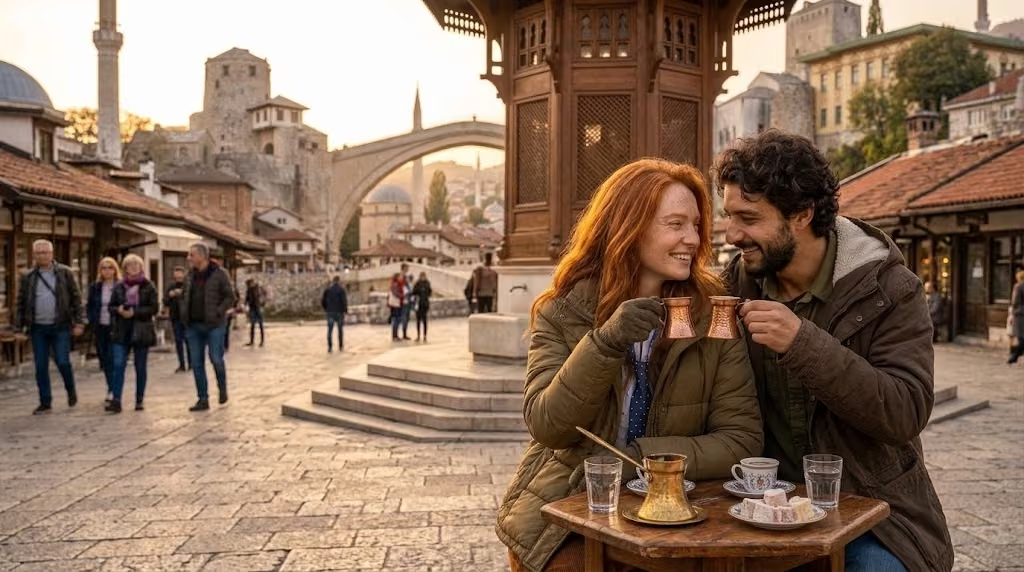
The coffee arrives at the table on a small copper tray. On the tray are a long-handled copper pot, which they call a džezva; a small handleless cup, a fildžan; a sugar cube and a piece of Turkish delight. In most places a glass of water comes with it too.
The most important difference is the sugar. No sugar is added while Bosnian coffee is brewed; it comes plain. You use the sugar your own way. The brewing is different too: in Turkish coffee, the coffee starts cold with the water; for Bosnian coffee, the water is boiled first and the coffee is added afterward. So its foam and taste differ a little from ours.
We learned how to drink it from our waiter:
- Foam first. You scoop the foam off the top of the pot with a spoon and put it at the bottom of the cup.
- Then the coffee. You slowly pour the coffee from the pot into the cup, over the foam.
- The sugar cube. My favorite part: you dip the sugar cube lightly into the coffee and take a bite, then a sip of coffee. You don't drop the sugar into the cup; it melts in your mouth and the coffee follows.
- The Turkish delight. You eat it between sips or at the end.
- No rush. Bosnian coffee isn't something you drink in one sitting and leave. You chat, watch the city, and the cup slowly empties.
There's also the matter of the cup: Bosnian coffee is drunk from a handleless cup, a fildžan. You hold the cup not by a handle but by its rim with your fingertips. It feels a bit hot at the first sip, but you get used to it quickly; in fact, feeling the coffee in your palms is its own pleasure.
Coffee facing the city on Hecco's terrace
The best part of the evening was the top floor of Hotel Hecco Deluxe. The moment we took the elevator up and stepped onto the terrace, all of Sarajevo was beneath our feet. Houses scattered over the hills, minarets, lights slowly coming on...
We got our coffees and sat facing the city. Enes took my hand. That moment was like the scene at the end of romantic comedies where the camera slowly pulls back. The only thing missing was background music; once Yunus played it from his phone, the scene was complete. A bit too complete, I'd say, but never mind.
We also closed the night's dessert at Vatra with palačinka. Palačinka is the Balkan version of our crepe. Chocolate inside, hazelnuts on top... Necdet ate two and said, "This vacation could end right here." Of course it didn't.
"What should we do tomorrow?" and an expensive but worthwhile decision
By the end of the first evening, we had almost finished the city center. We sat at home and talked about "What should we do tomorrow?" Going to Mostar by train was one option. Then we found Funky Tours' Mostar and Herzegovina tour online. With a little bargaining, the tour became private just for us.
But I'll admit, we were quite hesitant before booking it. Because the price of the tour was nearly as much as our accommodation and flight tickets. There was a silence at the table. Then Esma said this sentence: "When will we ever come here again?"
The decision was made at that moment. And let me tell you right now: by the end of the day, all of us felt that the money was worth every cent. And why, I'll tell you in a moment.
All of Herzegovina in one day
We set out at eight in the morning. The tour's itinerary was roughly this:
- Konjic and Jablanica: Leaving Sarajevo, the road passes through emerald-green rivers and mountain valleys. At Jablanica, we stood at the head of the historic bridge and listened to our guide Adnan tell the region's past.
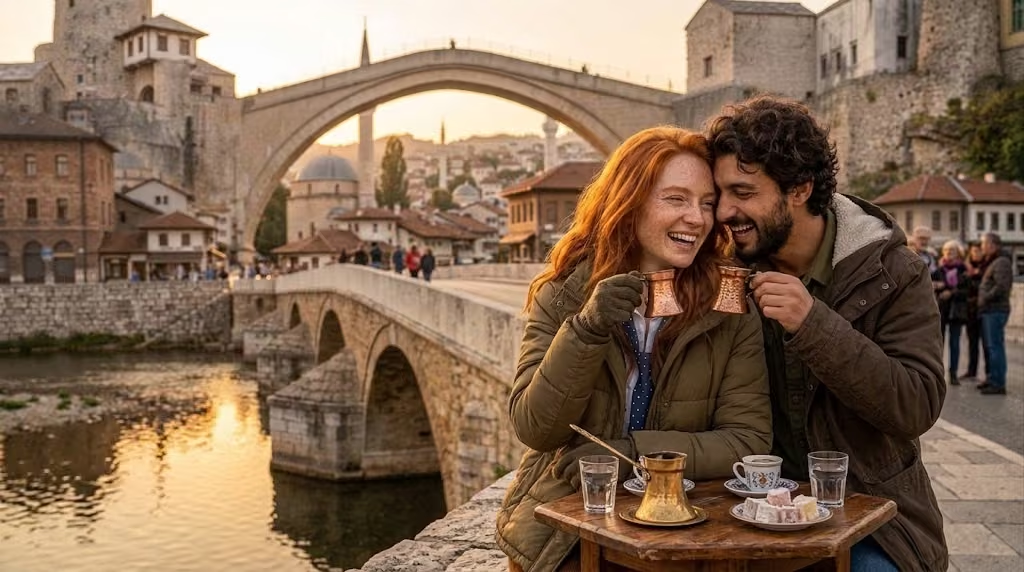
- Mostar: The heart of the tour. The famous Old Bridge, Stari Most, stands so gracefully above the turquoise waters of the Neretva River... When Adnan told us the bridge was destroyed in the war in 1993 and later rebuilt, all of us got a lump in our throats. We wandered the cobblestone streets and took lots of photos.
- Blagaj Tekke: A dervish lodge built at the source of the Buna River, at the foot of the cliffs. At the point where the water emerges from the rock, you feel as if you're inside a peaceful fairy tale. We ate lunch there too, beside the source.
- Počitelj: A small town like an open-air museum, with stone houses and fortress walls. We climbed the walls to look at the view and drank fresh pomegranate juice from local vendors.
- Kravice Waterfall: The finale of the day. The waterfall flows in front of you in every shade of green. Perin said, "I would never have forgiven myself if we'd gone back without seeing this." She was right.
Let me tell you why we thought this tour was worth its price: all the transportation and the entrance fees of the places we went were included. When we went, entry to Kravice Waterfall alone was 10 euros and Blagaj Tekke was around 5 euros; entrance fees alone came to 20-30 euros per person. On top of that, there were no hours in the car, no parking worries, no "Where are we going now?" arguments. And our guide Adnan explained every stop so well and in such detail that every stone we saw had a story.
After the tour: alone in the shoemaker's café
When we got back from the tour, everyone scattered home from exhaustion. Enes and I wanted to end the day with a coffee just the two of us. Walking aimlessly through the streets of Baščaršija, we happened upon Caffe Bar Andar. The moment we stepped in, we said, "Good thing we came across this place"; discovering such a lovely spot by chance makes you happier than anything planned.
Everyone knows this place as "the shoemaker's café," and when you learn its story you understand much better why. Andar opened on Baščaršija's Saraçlar Street, in what used to be a shoemaker's shop. The shop was opened in 1933 by Muharem Dizdarević, who made custom shoes. When he fell ill, his son Osman took over the business and over time designed such beautiful shoes that even after the shop closed, customers still asked about those models.
When Osman retired, the shop passed to his daughter Maida Ablaković. Seeing that times had changed, Maida decided to turn the place into a café reminiscent of an old Bosnian house. But when everything was ready and she looked at the bare walls, her heart couldn't bear it, and she brought back some items from her father's shop. Even today, colorful shoe lasts and pieces of boots tied with laces hang from the ceilings like chandeliers; shoemaking tools from her grandfather, her father and herself also sit on the walls.
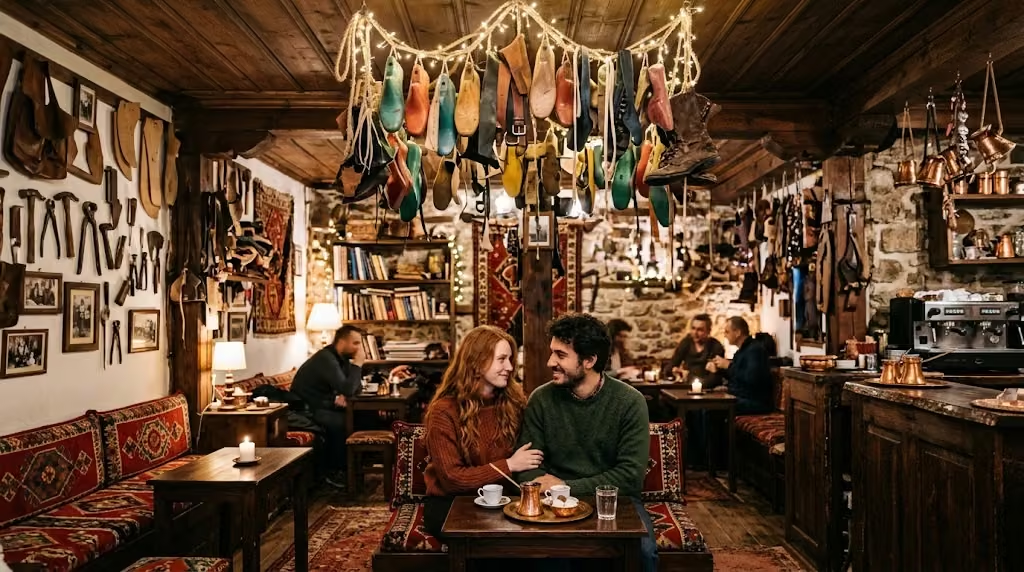
I loved the story of the name too: her family always called the shop radnja, meaning "shop." Reading the word backwards and removing the letter "j" gave "Andar." Later a customer told Maida that this word also means something in Spanish: "to walk." Could there be a better name for a café born from a shoemaker?
We sat there and drank our coffee looking at one of Baščaršija's busiest streets. A note for those who go: it's recommended to try the coffee ground in a mortar here, along with traditional sweets like kadayif or ružica.
The story of Andar: Furaj
Traveling with a big group has many good sides, but sometimes you just need a table for two. All day we had talked about Mostar, Blagaj, Kravice; at that table we talked about none of it. We just said, "Good thing we came." It was like that quiet two-person scene in the middle of romantic films; a calm coffee after a busy day.
The last day and the lockless Latin Bridge
On the last day we had breakfast with börek at Buregdžinica Bosna. Bosnian börek comes warm, with meat, cheese or spinach inside thinly rolled dough. One slice won't be enough, I'm telling you in advance.
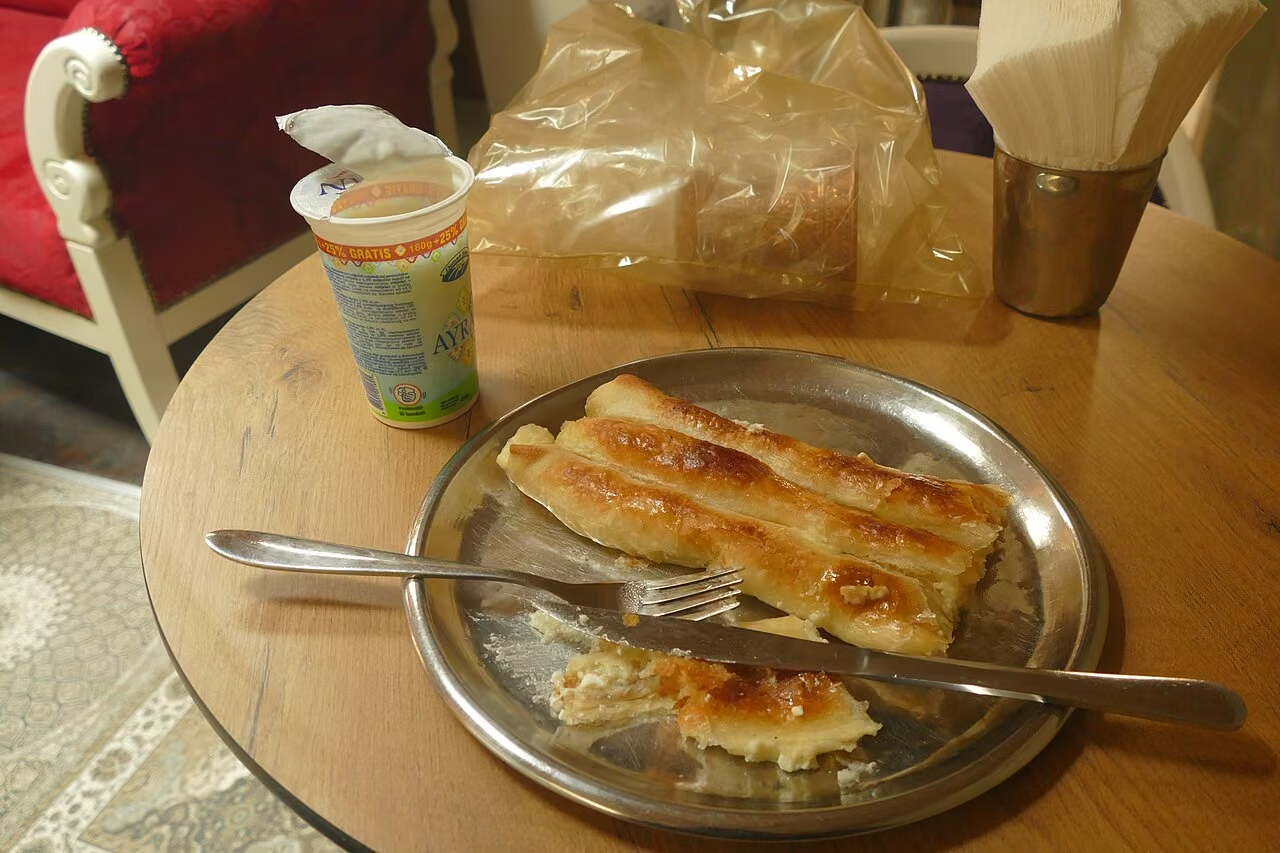
After breakfast we did our souvenir shopping. A few packs of Bosnian coffee and magnets to stick on the fridge went into the suitcases. The coffee is for the days when we'll miss those handleless cups at home; the magnets are so this trip smiles at us in the kitchen every morning.
It was a Sunday and many places in the city were closed. So we took one last walk and went to the Latin Bridge. I had only one thing in mind: to fasten our love to the bridge with a lock, Enes's and mine. We were going to live that scene from romantic films: put on the lock and throw the key into the river.
The plan was this: we'd buy a lock from the kiosk next to the bridge. The kiosk had no locks. We went to the only open market; none. We toured all the open souvenir shops one by one; none. No lock, no key, love went unlocked.
We both said the same sentence at the same moment: "If this were Turkey, forget the kiosk, there would be at least five street vendors selling locks on the bridge."
While walking, a sign caught my eye. It said "Beware of pickpockets." I took its photo and said, laughing, "Oh, how interesting, they put up a warning to beware of pickpockets." I'm still angry at myself for saying that sentence.
A hat at the bus stop
We went to the bus stop to get to the airport. My bag was sitting on top of the suitcase, with its edge slightly open. At one point I felt my bag stir. I turned my head; a man next to me was shaking his hat. A worm of suspicion crept into me. I hung my bag on my shoulder and looked inside. My wallet was in its place. I relaxed.
The bus came. Enes boarded first to pay everyone's fare together, and I followed behind him. That man in the hat also boarded the bus behind me... and got off as soon as he boarded. At that moment none of us noticed a thing.
An empty bag at the airport
We reached the airport and went through passport control. I looked for my wallet to browse duty free. It wasn't there. We checked every compartment of the bag, opened the suitcases, searched every corner we'd been to. It wasn't there.
Then all of us woke up to the matter at the same moment. That man in the hat had boarded behind me on the bus, taken the wallet from the open edge of my bag, and gotten off again. I thought of the stop and the sign. "Beware of pickpockets." How interesting, isn't it?
Luckily my passport and important documents weren't in the wallet; those stayed with me. I also had my credit cards canceled right away.
But here's the most interesting part
There were 140 euros in my wallet. I say there were, because I had given that money to the tour company the day before the tour, down to the last cent in the wallet.
So think about it: if we had said "Too expensive" and skipped the tour, that 140 euros would have gone into the hat man's pocket. We saw Mostar, Blagaj, Kravice. He stole an empty wallet. Life is sometimes like a Yeşilçam ending: the bad guy thinks he's won, but all he's left holding is a leather wallet.
And there's this: a year ago I had bought a charm soap from Çanakkale. The thing about this soap is: when the soap runs out, you throw the figurine inside into the sea, and your wish comes true. I couldn't throw it. I couldn't bear to, I forgot, it just never happened, and I carried that figurine in my wallet for months. Now that I think about it, the figurine needed to go. Not into the sea, but onto a Sarajevo bus.
The only thing I was truly sad about was that my wallet held a photo of my late grandmother. Money comes and goes, but that photo's place is different. I know what my grandmother would have said to me: "My girl, thank goodness you're safe. My photo is in your heart." And so it is.
Police, delay and a chain of mishaps
Meanwhile, our plane was delayed two or three hours. We used the time to call the police station. On the first call, the phone was hung up on us. We called again. The voice on the other end asked, "Madam, do you want us to come to the airport?" I said, "If that's possible, please come." They said, "We don't have that service, you need to come to Baščaršija and file a complaint." Since going to Baščaršija isn't possible for someone waiting for a flight, the matter was left unresolved there. Interestingly, we didn't see any police at the airport either.
During the delay, one water and one bottle of juice were offered as a courtesy. We hadn't eaten, thinking "We'll eat something nice when we land in Turkey." At the airport we couldn't find anything decent to eat either. Finally Enes found a sandwich and came back, handing me a piece: "Cheese."
I put the sandwich in my mouth and realized. It wasn't cheese. It was chicken. Darlings, I haven't been able to eat chicken since childhood. I never have. But Esma, Enes's sister, was next to me, and so as not to be rude, I swallowed that bite without breathing, without chewing. It was the reverse of the "daughter-in-law cooking for her mother-in-law for the first time" scene in Turkish series; this time I was the guest, and I passed the test in silence.
When we lined up to board the plane, Enes turned to me: "I'm going to confess something to you, but let me say it on the plane." I insisted, he wouldn't say. I insisted, he wouldn't say. Finally I couldn't hold back: "If you're going to confess that you gave me a chicken sandwich, I know."
That was exactly what he was going to confess. He had thought it was cheese too.
To relieve stress we went into the airport smoking room and had a cigarette, but it wasn't outdoors, it was a closed room, and we choked in the smoke. There wasn't even a corner to get some air. When we boarded the plane it wasn't over either: another half hour of delay inside the plane.
Let's sum up: First the wallet was stolen. Then that phone call with the police. On top of that, the delay. On top of that, the chicken sandwich. On top of that, another delay on the plane. If a series finale had this many mishaps, I'd say "The writers overdid it."
But still: go
In the end, all of us returned home safe and sound. And I tell you sincerely: go to Sarajevo.
You can go from Turkey without a visa, the city is warm, the food is wonderful, and its history gets into you in every corner. Here are a few notes from me:
- Carry cash. Credit cards aren't accepted everywhere.
- Rent a house if you're a crowd. We stayed at Apartment Noah right next to Baščaršija, booked through Booking; a 4+1 apartment was plenty for six people.
- Keep your bag tightly closed. Especially at bus stops and in crowded places. The "Beware of pickpockets" sign is no joke.
- Don't carry your passport in your wallet. Keep it somewhere separate.
- Don't miss the Herzegovina tour. A tour is very handy for seeing Mostar, Blagaj, Počitelj and Kravice in one day. Check whether entrance fees are included.
- Join the free walking tours. With Funky Tours' free walking tours, you can see the city while listening to a local guide.
- Drink Bosnian coffee the proper way. Don't drop the sugar in the cup; dip, bite, then sip.
- Coffee and magnets for souvenirs. A pack of Bosnian coffee is the best keepsake to relive that taste when you get home.
- Bring your lock from Turkey. I'm serious.
Frezya's note
Sometimes the best memory of a vacation comes from its worst-going day. I lost a wallet in Sarajevo, but I gained a story for life. And also the fact that Enes can never again say "cheese" to me.
Comments