
Çömlek Çatlatan Rice Recipe: A Meatless, Corn-Studded Showstopper Flipped Onto a Platter
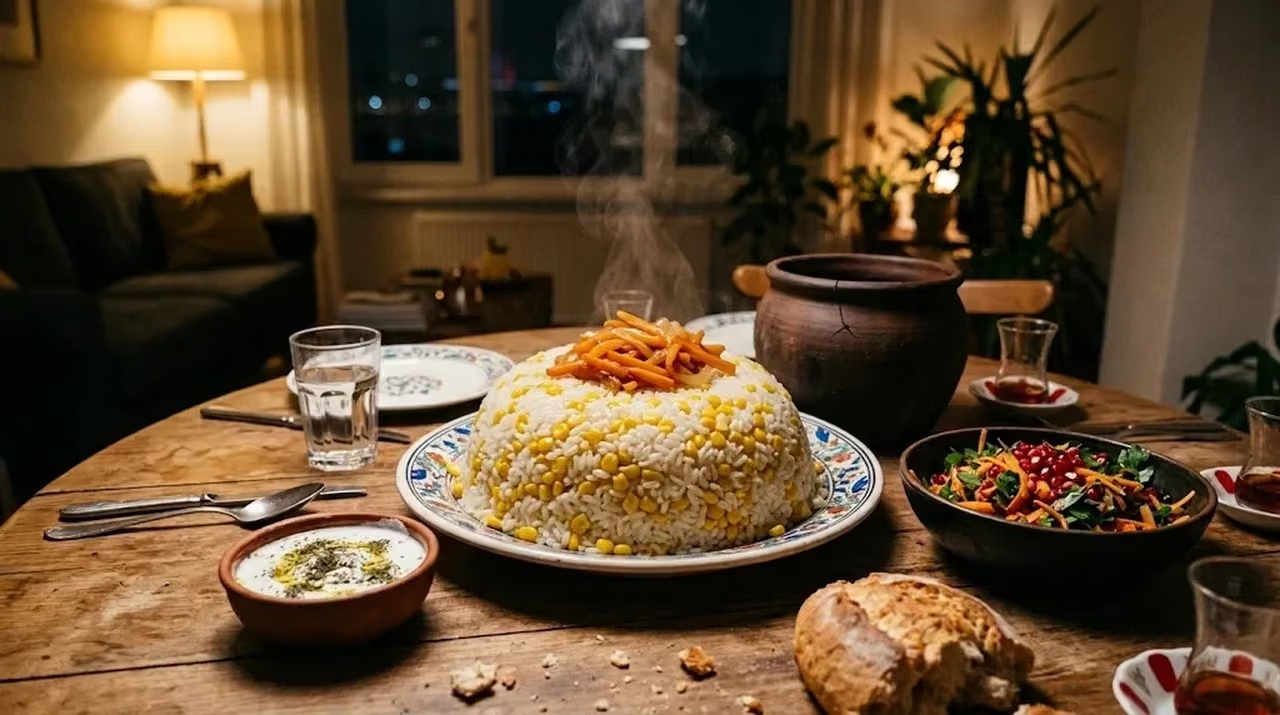
Even the name is intriguing: çömlek çatlatan, literally "pot-cracker." Grown around Bolu, Beypazarı and Nallıhan, this special rice soaks up water and swells, and in Frezya's kitchen it becomes a meatless, buttery rice with corn. Light and practical, it's flipped onto a platter at serving time and stands tall like a cake.
Temsilî görseldir, yapay zekâ ile üretilmiştir. Photo: Yapay zekâ ile üretilmiştir
Some recipes have such lovely names that you want to cook them before you even read the ingredients. Çömlek çatlatan rice is one of them. When I first heard it, I asked Enes, "What kind of rice cracks the pot?" He shrugged: "Let's make it and see." We made it, we saw, and since that evening it has become one of our home's winter classics.
Why is it called çömlek çatlatan?
Çömlek çatlatan is not your everyday pilaf rice. It is a local rice grown in small quantities around Bolu, Beypazarı and Nallıhan. Its trademark: it absorbs so much water and swells so much that, as the story goes, it used to burst any cracked clay pots it was cooked in. That is where the name comes from.
It is also a very light rice. After eating it, you don't get that heavy "I need to lie down on the couch" feeling. It's exactly what I'm after on winter evenings.
Why meatless?
The original recipe is made with lamb, but I like making this pilaf without meat. The rice itself tastes so good that it becomes the star of the dish even without meat. Meatless, it is both lighter and more practical. My only extra is frozen corn: lightly sautéed in butter, it gives the pilaf both color and a sweet flavor.
Before ordering takeout on a winter evening, think about this: a packet of rice, a bag of corn in the freezer and a little butter, and a hot, impressive dish is waiting for you.
Ingredients
- 1 cup çömlek çatlatan rice
- 1 cup frozen corn (if you like, you can use half a cup of orzo instead)
- 2 tablespoons butter
- 2 tablespoons olive oil
- 2.5 cups hot water or vegetable stock
- Salt, black pepper
Method
- Soak the rice. I soak the rice for 15 minutes, and that's enough. You can soak it longer if you like; in some recipes you'll see the rice soaked in plenty of water for 2 hours before cooking.
- Heat the fats. Put the butter and olive oil together in the pilaf pot first. The olive oil keeps the butter from burning, and the butter gives the pilaf that familiar aroma.
- Sauté the corn. Add the frozen corn and sauté for a few minutes. When the corn has absorbed the butter and turned slightly glossy, move on to the next step.
- Layer the rice. Drain the soaked rice and spread it over the corn. Level it by pressing lightly with a wooden spoon. Don't stir; the rice will stay layered in place.
- Add the water from the side. Slowly pour the hot water or vegetable stock over the wooden spoon and along the edge of the pot. Don't let the rice scatter or the layers break. Add the salt and black pepper.
- Cook over low heat. Lower the heat and cook until the rice has absorbed its water.
- Let it rest. After taking it off the heat, cover the pot's mouth with a paper towel, put the lid on top and let the pilaf rest.
- Flip it. At serving time, place a large serving platter over the pot and flip it in one motion. Golden corn on top, rice underneath; a pilaf that stands on the plate like a cake.
Frezya's tips
- Mind the water ratio. Çömlek çatlatan absorbs far more water than the rice we're used to. Go by measurement, not by eye.
- Soaking time is up to you. 15 minutes is enough for me. If you have time, you can soak it longer; the rice will be softer.
- Fat balance. If you're using vegetable stock and it's oily, reduce the fat a little. If you're cooking with plain water, don't be afraid of the butter.
- Orzo instead of corn. For anyone who doesn't like corn or doesn't have it at home, orzo works very well too. Sauté the orzo in butter and olive oil in place of the corn until pink, then add the rice and continue exactly as in the recipe.
- Don't thaw the corn. Take the corn from the freezer and toss it straight into the pot; if thawed beforehand, it can release its water and turn mushy.
- The courage to flip. Your hand may tremble the first time you flip it. Press the platter down firmly and don't hesitate. Even if it falls apart a little, it loses nothing of its flavor.
- What goes with it? A seasonal salad and a bowl of yogurt. A meatless table, but nobody leaves hungry.
For meat lovers: the classic lamb and carrot recipe
I like it meatless, but the best-known version of this pilaf is made with lamb and carrots. If there are meat lovers at your table, here's the classic recipe:
Ingredients
- 1 cup çömlek çatlatan rice
- 2 cups pre-cooked lamb
- 1 carrot (cut into thin julienne)
- 1 onion
- 2 cloves garlic
- 2.5 cups meat stock (hot water if you don't have any)
- 4 tablespoons olive oil or enough butter
- Salt, black pepper, and a pinch of cinnamon if you like
Method
- Soak the rice in plenty of water.
- Heat the fat in the pot; add the onion, garlic and carrot one after another and sauté briefly.
- Add the pre-cooked lamb and sauté for another minute or two.
- Spread the drained rice over the meat and press lightly with a wooden spoon.
- Slowly pour the hot stock along the edge of the pot, over the spoon. Add the salt, black pepper and, if you like, the cinnamon.
- Cook over low heat until the water is absorbed, cover with a paper towel and let it rest, then flip onto a serving platter.
You can also use beef instead of lamb. If the stock is fatty, reduce the fat you put in the pot a little.
Coming to the table
The best moment of this pilaf is the second you flip it onto the platter. When you lift the pot, the layer of corn, or of meat and carrots, is revealed and the steam hits your face. Whoever is at the table lets out an "Ooo." Not bad for a pilaf, is it?
Enjoy your meal!

Comments